Amplification only works on content that's already earned it. Surface your high performers, lock the usage rights early, then amplify.
Boosting buys reach; Partnership Ads buy a channel. Boost when a post is having a moment and you want eyes on it fast. Run a Partnership Ad when it's converting and you want a measurable, repeatable line item.
The organic-to-paid handoff is where wins leak. When the post, the rights, and the performance data live in separate tools, content stalls. Superfiliate's Meta Ads Suite puts the whole handoff in one system.
When an organic creator post lands, you know. Engagement is strong, the comments are genuine, and you can see that halo effect beginning to form. But then comes the part that in most brands, nobody actually owns outright: getting that post that's crushing it into paid channels.
Your influencer team ran the partnership and owns the relationship with the creator. But paid media is managed by a different person on a different platform, looking at different numbers. At best, your organic-to-paid handoff is a Google Drive folder and a distant Slack ping which maybe gets acted on (if it's a quiet day in the office).
Somewhere in that gap, your best-performing content is quietly losing momentum until it fizzles out. That organic winner becomes just that; it sees no impact anywhere else.
But amplifying creator content in paid isn't simply a reward for a good post; it's the bridge between two halves of your program, whether you are actively using both halves or not.
Why paid amplification of creator content starts before the spend
But before you put a dollar behind anything, creator content has to earn it. Amplification earns placement on posts that are already performing: look for strong engagement and early conversion signals. In other words, content that your audience is clearly resonating with and responding to.
When you list it out, everything looks pretty simple:
- Surface your high performers.
- Secure the content rights.
- Amplify.
But this middle step is where many brands get stuck. You can't run someone's content through paid media without permission, and usage rights run on a clock, usually 30 to 60 days. You need to lock those rights in early and launch with a solid runway to test. Going back to negotiate usage rights after the fact for high-performing organic content isn't just inefficient and time-consuming; it's also a lot more expensive.
Once you've got a proven post and the rights to use it, you've got two levers, and they do completely different jobs.
Boosted Posts: For when you want speed over scale
A boosted post is best when something is having a moment and you want more people to see it, fast. A boosted post is the simplest lever there is: you're putting paid spend behind an existing post to push reach, running off the original with limited targeting and almost no setup.
But there's a big caveat here: boosting a creator post buys you eyeballs, not efficiency. It runs off the original organic post, so your targeting and optimization options are thin and it won't scale cleanly into a real acquisition motion.
This isn't a flaw with the method per se; more the job that boosting was built for back when targeting options were a lot less sophisticated and Meta wanted to offer a quick way for brands to put ad spend behind content.
When to use boosted posts with creator content:
- Content is getting strong engagement and you want more eyes on it quickly.
- You need to support a moment such as a launch, promo, or announcement.
- You've got leftover budget and a short runway.
- Visibility matters more to you right now than conversion efficiency.
One thing worth knowing about boosted posts is how they show up in the feed: it looks like the creator's normal post. The brand name doesn't lead the way like a sponsored ad does. It reads as the creator, but amplified.
Partnership Ads: For when you want control and full scalability
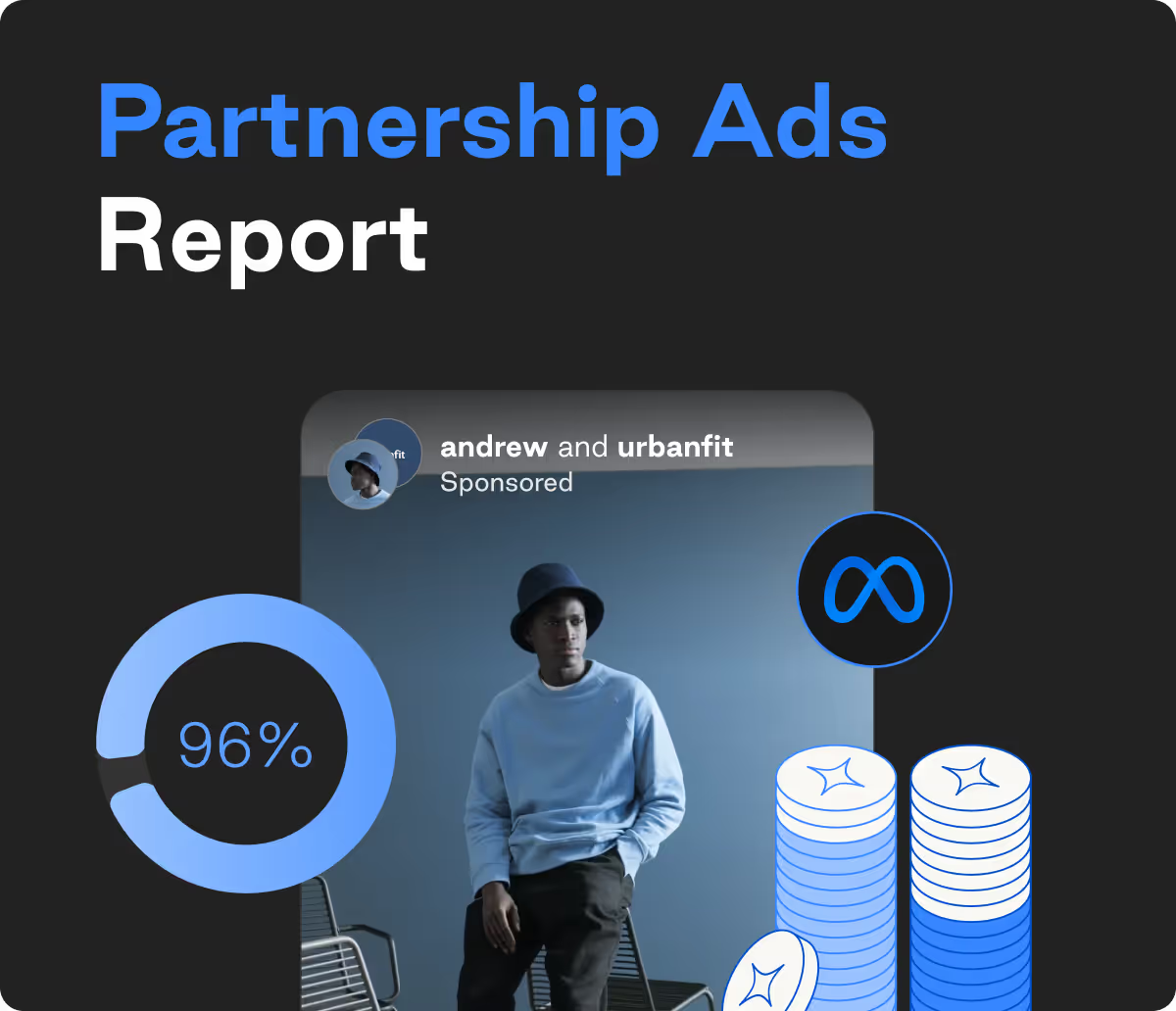
Reach for a Partnership Ad when you want acquisition you can measure, target, and repeat, rather than just more reach.
The Partnership Ad format runs creator content through Meta Ads Manager with full control over targeting, spend, and optimization. This is the workflow you've probably heard called "whitelisting." The ads run through Ads Manager and get optimized for conversion outcomes like CPA and ROAS, the metrics your paid team already lives by. Partnership Ads have quietly absorbed the whole whitelisting workflow as Meta's preferred amplification method for creator-led content, and offer more streamlined account permissioning as well as performance enhancements.
The reason Partnership Ads work is simple: they appear in the feed as a paid collaboration between the brand and the creator. With the creator's face and voice on the ad, the audience reads it as a genuine referral rather than a buy-now pitch, and this completely changes how the message resonates.
This is where you stop borrowing the creator's reach and start building a testable channel on top of their social proof and credibility. It's the exact handoff between influencer and paid teams that usually breaks, the so-called "messy middle," and one that Partnership Ads are designed to make much cleaner.
When to use Partnership Ads with creator content:
- The content is showing early conversion signals, not just engagement.
- You want to scale acquisition, not just reach.
- You need real audience targeting and room to test.
- You want to get more out of a post that's already proven itself.
One thing worth saying: follower count isn't the signal you're scaling for. A creator with a small audience can produce an ad that outperforms a big name once there's spend behind it, which is why the strongest programs start with a handful of smaller creators and let performance pick the winners.
So, which paid media format do you reach for? The truth is that while boosting buys you reach, it's partnership ads that buy you a channel.
If a post is having a moment and you want more people to see it now, boost it. If a post is proving it can actually convert and you want to turn that into a repeatable line item, run it as a Partnership Ad.
The trap to watch for is the leftover-budget reflex: reaching for a boost when what you actually needed was optimization. This is where good content gets wasted on vanity reach rather than scale. To build a truly sustainable creator program, you need to match the growth lever to the goal, not to whatever format is easiest to set up before the end of the business day.
Building a paid amplification strategy that compounds
Organic creator content alone isn't a growth lever; but the decision of how to amplify is.
First, you need to surface what's working, lock the usage rights, then match the post to the path you actually want. Do that consistently, and each cycle of amplification teaches the next which content is worth amplifying. Your boosting gets sharper, your Partnership Ads get more efficient, and the guesswork shrinks.
But this is where most programs leak value. Why? The handoff between paid and influencer teams is still run manually. The organic post is approved in one tool, the usage rights live in a spreadsheet, and permissioning takes a week of back-and-forth before the ad can even go live.
The hard truth is that if your organic wins aren't visible to the people who own paid, they may as well not exist.
This is the exact friction that Superfiliate's Meta Ads Suite is built to remove:
- One-click permissioning replaces manual whitelisting requests, so your ad buyer isn't waiting days for handle access.
- Content Library keeps every asset and its usage rights window in one place, visible to both influencer and paid teams.
- Usage rights notifications flag a winner before it's forced to pause on an expired rights window.
- Partnership Ad Insights show which creators are actually beating your account average, so the next brief is built on what worked instead of a guess.
When the organic win and the paid amplification live in one system with unified data connecting them, it's the difference between a content moment and a compounding channel you know you can run on repeat.
Great creator content is the easy part. Knowing what to do with it once it's working is the multiplier.

Beth Owens is Superfiliate's Head of Content and GTM storyteller. On the weekends, you'll find her on the yoga mat or searching out the perfect flat white in whichever city she is currently inhabiting ☕️



.png)
.png)