
Your campaign wrapped two weeks ago. The creator content performed well — strong engagement, comments that looked like genuine purchase intent, an audience that matched your target customer.
Now? It's sitting in a shared folder somewhere. Your paid team is running the same assets as before the campaign started.
This is the version of the creator program problem that doesn't get talked about enough. Why? Because it lives in the gap between teams.
The influencer team runs creator programs and brokers the relationships. The paid team buys media and measures CPA. Neither team is doing anything wrong, but the content your creators just made never made it across the room.
What you paid for wasn't just a post; it was also a media asset. The question is whether you have built the connective tissue to activate it.
Why content stops where it was posted
Deploying creator content across channels is an infrastructure problem, where most programs were built without the infrastructure to solve it.
Three things typically go wrong in sequence:
1. The usage rights aren't negotiated upfront, so by the time anyone thinks about deployment in paid, the window is either closed or requires a separate conversation with a creator at an additional cost–or who has already moved on.
2. Organic and paid teams don't share a workflow, so the paid team never sees what the organic team produced until well after the campaign has wrapped.
3. When the content exists and the rights are available, nobody owns the handoff — it's not a defined step in anyone's process.
Each of these is a solvable problem. But together, they produce the same outcome: content that never gets tested in paid, and a program that plateaus because the feedback loop between organic performance and paid deployment was never closed.
Rebecca Beach, who runs influencer marketing at Fashion Nova, describes what becomes possible when you treat creator content as a multi-channel asset from the start: that content can be used anywhere in the customer journey where a trusted voice saying a real thing about a real product would move someone closer to a purchase.
“You can use influencer content in your paid media. You can use influencer content on your socials. You can use influencer content on your website, in flyers that you put in boxes that you're shipping out, catalogs."

Rebecca Beach
Influencer Marketing and Creator Relationship Manager, VERBfluence Agency
The creators who made that content have already done the hard work. The question is whether you're ready to maximize what they made.
What the numbers have say about the performance of creator content in paid
The conversation about whether to invest in deploying creator content across channels usually runs into two objections.
The first is budget: Paid amplification costs money out of someone’s budget. The second is uncertainty: Will creator content actually outperform what we're already running?
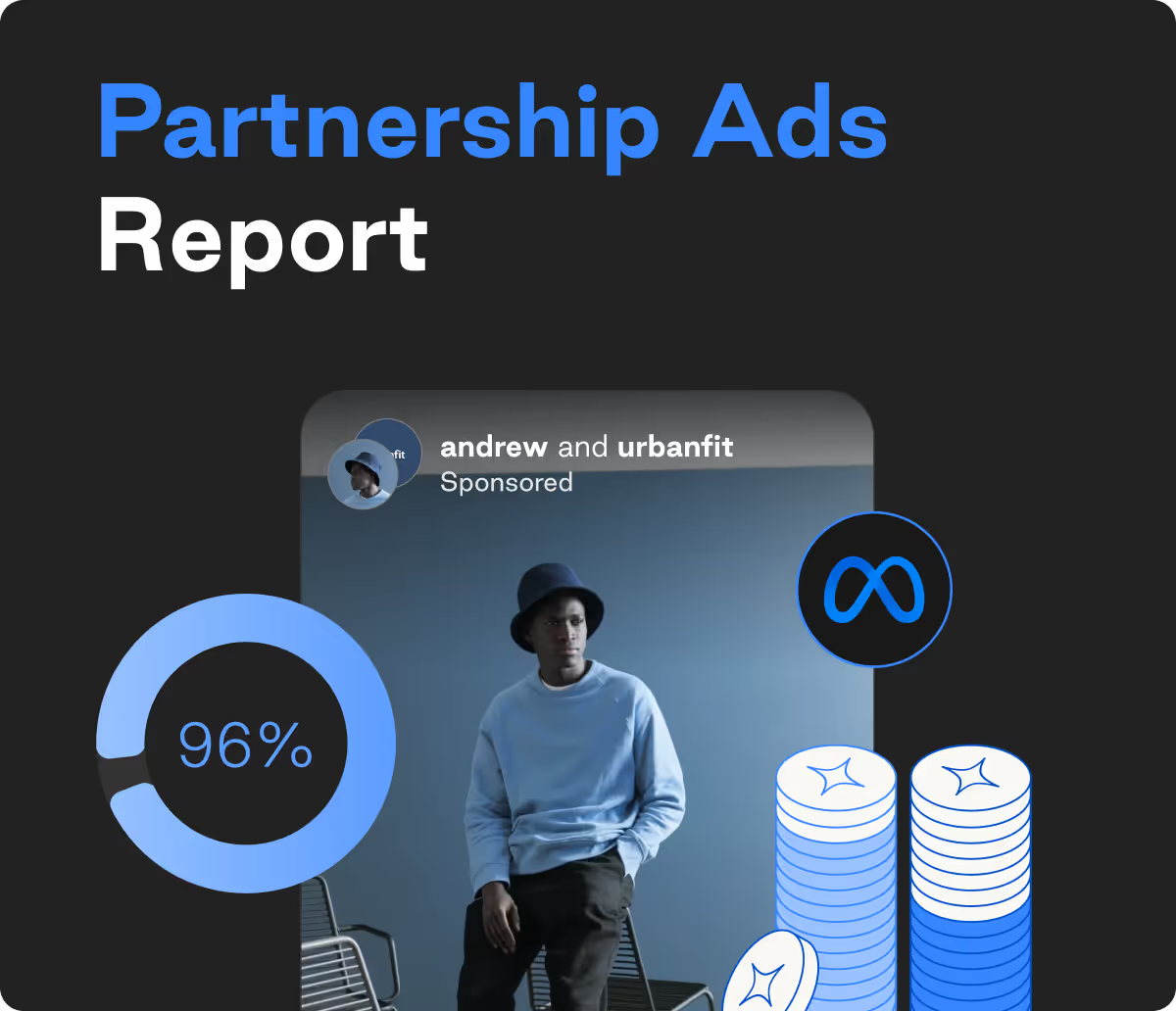
Maurice Rahmey has run this analysis at scale. As founder of Disruptive Digital — a performance marketing agency with deep roots in Meta —his own data shows creator-shot ads outperforming studio-shot equivalents:
“When you run partnership ads — so ads with your brand, whitelisting, or including a creator in your content — it can actually lead to a 19% lower cost per acquisition and 53% higher click-through rate."

Maurice Rahmey
CEO at Disruptive Digital
The mechanism isn't mysterious. Creator content feels native to the platform in a way that polished studio assets don't. In a feed that users are actively scrolling past, native wins. There's also a production economics argument: working with three or four creators costs roughly the same as one studio campaign, but produces three or four times the creative volume for testing.
The more useful frame for a leadership conversation: When those two teams work from the same data and the same workflow, the content that's already proven itself organically becomes the highest-confidence creative available to the paid stack.
The channels most brands forget to ask about
Deploying creator content across channels isn't simply a media strategy question. It's also about content strategy. Each channel has a different job, and creator content earns its keep differently depending on where in the customer journey it shows up.
In paid social, creator content drives acquisition. That 19% lower CPA Maurice describes comes from audiences encountering a real person with a real perspective on a product, in a format that doesn't look like advertising.
In email, the same content builds trust with an audience that's already opted in; a creator's authentic review lands differently than a promotional headline. On a product page, it provides social proof at the moment of purchase consideration. In a physical insert, it extends the creator's voice into a channel that has nothing to do with social media.
The question to ask after every creator campaign: Where in our customer journey would this content move someone? Where does having a trusted voice about this product really matter?
For example, when a creator's content performs well, you can both run it as a paid ad and feature it in brand emails. This is partly relationship investment (the creator gets visibility, which feeds the program's retention architecture) but it's primarily a performance decision. The content that's already earned organic traction is the content most likely to earn paid traction.

Beth Owens is Superfiliate's Head of Content and GTM storyteller. On the weekends, you'll find her on the yoga mat or searching out the perfect flat white in whichever city she is currently inhabiting ☕️

.png)
.png)