

Your content brief is a masterpiece. You've thought through every talking point, every brand safety guardrail, every do and don't.
And when the content comes back looking exactly like what you asked for — the right hook, the right structure, the right message — it's genuinely hard to name what's wrong with it.
That is, until you compare it to the video that has continuously driven sales for two years.
If you've ever briefed a wave of creators and gotten back content that's “technically” correct and yet completely invisible, you've already run this experiment.
The brief didn't fail to communicate. It communicated too well. And in doing so, it got rid of the secret sauce that makes creator content perform: the creator's unique story and actual perspective on the product.
The instinct when content underperforms is often to brief even more thoroughly next time. More direction, more examples, more guardrails.
This blog is an argument for the complete opposite.
Why the “perfect” brief kills creator content
Here's the problem with over-briefed content that doesn't get talked about enough: it's not just that the content performance is average. It's also unlearnable.
When twenty creators follow the same brief and produce structurally identical videos, you get zero signal about what worked. Why? Because you've eliminated the creative variation that would make the data meaningful.
Did this creator drive sales because of the specific angle they took? The format they used? The specific moment in their life that made the product relevant to them?
You can't know. Everything looks the same.
The result is a program that scales without getting smarter. You brief more creators, produce more content, run more campaigns, and every cycle starts from roughly the same place as the last. There's no accumulation of creative intelligence because the brief didn't leave room for any insights to develop.
This isn't a measurement problem. It's a briefing problem. Briefs that are too prescriptive yield content that is recognizable, on-brand, but completely invisible in a feed full of content that looks exactly like it.
Creators know their audience better than you do. That's the entire premise of why you're working with them. When you script what they say, you're essentially hiring someone with an audience to deliver your message to their followers. And their followers, the ones who trust them, can tell.
The fix isn't a better brief. It's a shorter one.
The Double Yellows model: Determining where the lines actually are
Giving more creative latitude as a brand sounds risky, unless you have a framework for it. This is where the “Double Yellows” model comes in.
In real life a double yellow is a line you never cross, regardless of the conditions. In a creator program, it means the exact same thing; if that line gets crossed via hate speech or political content, for example, the content comes down–even if it's making money, even if the comment section loves it.
But everything else — how the product is framed, which feature gets highlighted, what angle the creator takes — is at the creator’s discretion.
In practical terms, this means your brief has two jobs:
- Give creators the product context they need to talk about it accurately e.g. what it does, who it helps, what makes it different.
- Defining the Double Yellows
That’s it. Everything above that floor is the creator's territory, and their territory is where that performance variable lives.
The brief that specifies the hook, the structure, the talking points, and the preferred format isn't protecting the brand. It's narrowing the creative range without adding meaningful protection, and narrowing the creative range is exactly what prevents the program from learning anything new about what’s working.
What happens when you let go of the perfect brief
The best argument for creative latitude isn't philosophical. It's a video on TikTok that's still driving sales–two whole years after it first went live.
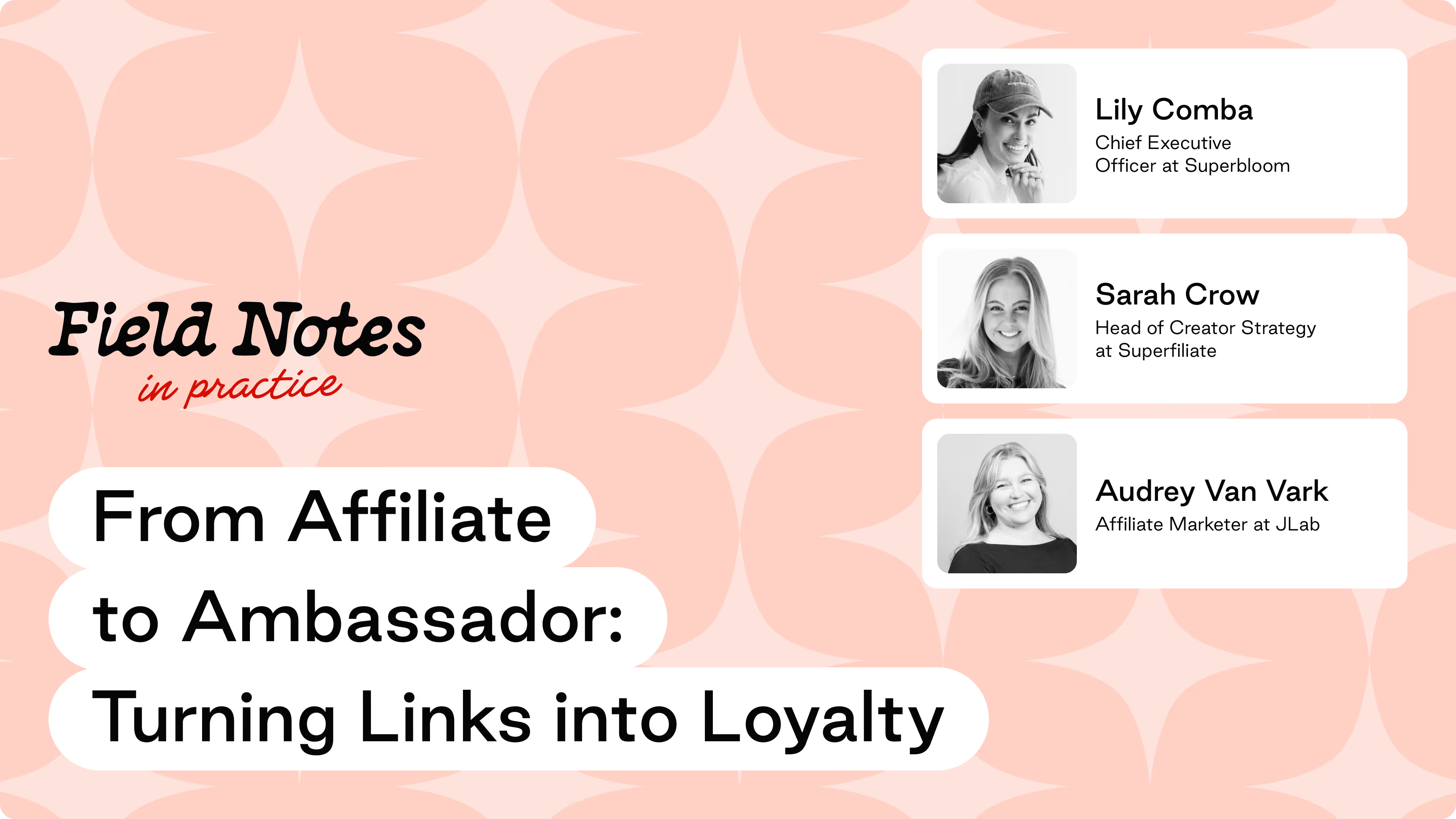
Audrey Van Vark, an affiliate marketer at JLab sampled the JBuds Lux headphones widely and told creators to post about how they actually used them. One of those creators was at the gym one day, heard men talking about her, and realized the product's "be aware" mode was what she needed. The creator rebranded it as "safety mode" and made a video about being a woman in the gym who can hear what's happening around her.
Audrey would never have put that angle on a brief. Not because it's a bad angle, but because it required the creator’s specific experience to find it; A woman on a treadmill in the gym with a genuine reason to care about ambient awareness. That's not something a brief can manufacture.
But now Audrey now knows that safety framing resonates with young women. That knowledge informs which use cases she prioritizes when briefing creators and which angles she tests in paid amplification. One video generated an insight that's been compounding across JLab's program ever since.
A compounding that only happened because the brief didn't prevent it.
How to build a brief with creative latitude
Content that comes from a creator's genuine experience doesn't perform because it's “authentic“ in some abstract sense. It performs because it finds use cases and audience moments that couldn't have been scripted
Take your current brief and go line by line. For each section, ask yourself: Does this tell the creator what the product is, or does it tell them how to talk about it?
Product context, what it does, who it helps, what makes it worth talking about, stays. Clear limits — those Double Yellows — stay. Suggested hooks, preferred structures, required talking points, scripts, should go.
Once the brief is stripped down, the performance loop becomes available. One creator frames the product as a safety tool. Another frames it as a gym convenience. A third frames it as a thoughtful gift. You now have three distinct angles in-market, and when one of them outperforms, you have a creative direction worth building on. Brief the next wave of creators toward the framing that converted. Test variations of it. Find out how far it travels.
The instinct to brief thoroughly is the instinct to reduce risk. But the risk a detailed brief actually introduces via unlearnable content, no creative variation, is harder to see than the risk it prevents.
Programs built on the Double Yellows model produce the creative range that makes each campaign smarter than the last. It's the only way to find the angles you'd never have written yourself — and those are the ones that travel. What you brief directly impacts what converts, which means the brief is one of the highest-leverage places to build a feedback loop.

Beth Owens is Superfiliate's Head of Content and GTM storyteller. On the weekends, you'll find her on the yoga mat or searching out the perfect flat white in whichever city she is currently inhabiting ☕️


.png)
.png)