
More creators won’t fix a plateauing program. When gifting, affiliate tracking, and paid media live in separate tools and the answer to “what worked” lives in someone’s memory, gains can’t compound — you’re stuck in spray-and-pray mode.
One program type won’t serve every objective. Build a multi-program structure — customer affiliates for conversion, ambassadors for depth, UGC creators for content — connected by tiered progression that tells you exactly who’s worth investing more in.
Close the feedback loop. Gifting generates performance data, performance data identifies who to invest in, and that investment produces content that feeds paid and organic. When the entire journey lives in one place, the program stops guessing and starts compounding.
Most creator programs don’t fail. They plateau.
You know the feeling. A creator posts, it drives a spike in sales, and then — nothing. You can’t explain why it worked. You can’t replicate it. You can see that something in your program is producing results, but you can’t point to what, which means you can’t do more of it.
The difference between a program that compounds and one that runs in circles usually isn’t the creators, the content, or the budget. It’s whether there’s a system underneath it that gets smarter every cycle.
That gap between “I know this is working” and “I can prove it” is one of the most common challenges in scaling a creator program. And the fix isn’t a bigger budget or more creators; it’s the connective tissue that turns isolated wins into a system that compounds.
Why more creators won’t fix it
When a program stalls, the instinct is to add volume; more creators, more campaigns, more spend. But poor performance is the symptom, rather than the core problem.
A program that drove measurable results at 50 creators starts to buckle at 150. Not because the creators got worse, but because the structure didn’t grow with them.
Programs feel scattered and chaotic when there’s no architecture connecting all of the pieces together. Gifting runs in a spreadsheet. Affiliate tracking lives in another tool. Paid media is managed by a different team entirely. And when the answers to “what worked last quarter” live in someone’s memory rather than a system, program gains will struggle to compound.
This is a predictable outcome of programs that grew without the architecture to support growth. Without a unified system that ties creator activity to business outcomes, you’re stuck in what Lydia Lee, founder of Clout Collective, refers to as “spray-and-pray” mode: You don’t have a clear way to answer the question leadership is really asking: How does this program or that contribute to our business goals?
Lydia explains how building the right models to scale helps you to build the case for more budget:
The programs that compound approach creators like performance media; a full-funnel system where every stage is measured and every cycle informs the next.
Building a multi-program structure with built-in progression
First off, let’s get the hard truth out of the way: One creator program won’t serve every single marketing objective.
An affiliate program that’s optimized for last-click revenue isn’t guaranteed to produce the creative assets your paid team needs. Likewise, an ambassador program built for community engagement and awareness won’t give your CFO the hard acquisition numbers they want to see to justify spend.
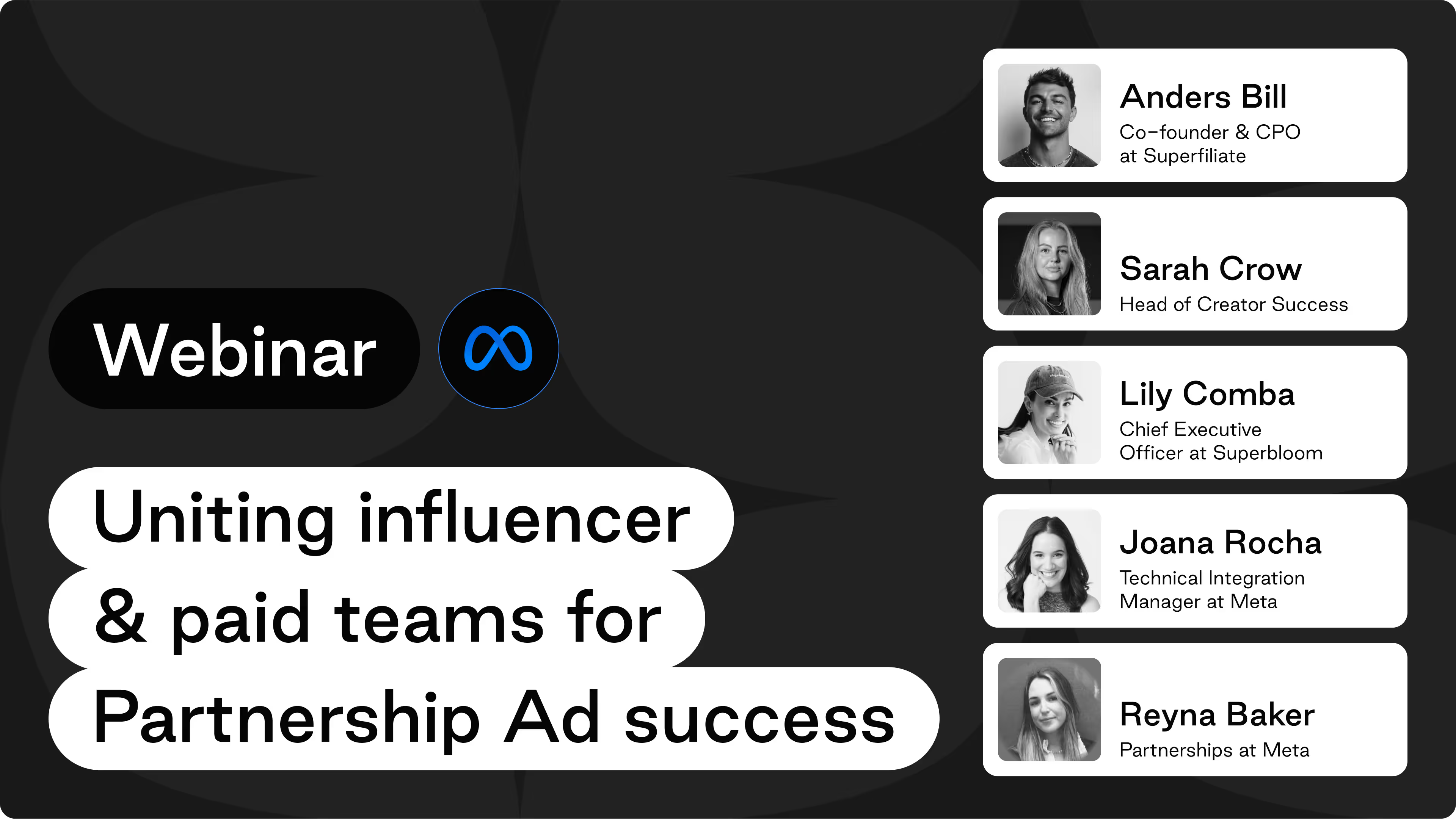
The first step isn’t picking a “better” program type. As Superfiliate’s co-founder and CPO Anders Bill explains, it’s about building multiple program types into a connected system where marketing investment follows performance.
Think customer affiliates for conversion, tiered ambassadors for depth and retention, and UGC creators for content production. Then, it’s about connecting those programs with a progression system that moves creators upward based on performance.
A tiered commission structure for affiliates is what turns a list of creators into a program with serious direction. For example, you can offer 10% at entry, 15% when a creator hits $2,500 in sales, and 20% at $5,000.
“The three-tiered structure works because it’s not only how we present our backbone — it’s how our influencers and ambassadors are going to grow not only through themselves, but through themselves within our program.”
Colleen
ClearStem
Creators see a pathway to better rewards. The brand sees a pipeline. Best for all, every tier advancement offers you a valuable signal; it’s telling you who drives results and who’s worth investing more in.
Design the support layer that keeps creators moving
But building a tier structure and then leaving creators to figure out the rest isn’t going to pay dividends. If the tiers exist on paper but there’s no onboarding that explains how to advance or regular communication that keeps the program alive, creators will effectively churn and become inactive.
To make the structure actually work, you need to invest in pathways to success: a clear onboarding process, performance transparency, and regular communication that empowers and excites creators.
Start with personal onboarding
A 15-minute call — not a campaign briefing, but a conversation about who the creator is and what they care about — will differentiate your program from every other brand in the creator’s inbox.
Remember: Creators are people, too! They have their own milestones, their struggles, and a life outside of content creation. Tapping into this won’t just strengthen your relationship with you; it will make creators go the extra mile.
“All of them say that they don’t talk to other brands about that sort of stuff. And a lot of them will also say that they’ve never spoken to another person at a brand on the phone or anything. So having that personal connection is really great.”
Molly Cole
Epic Gardening
Equip your creators with useful content
Focus on enablement, not mandates that creators have to deliver “this” or “that.” Giving creators inspo for how they can participate in your program is the best way to encourage regular posting and engagement. Consider doing a monthly newsletter that offers content ideas, updates on new product launches, and useful talking points. No scripts. Creators take can what’s useful and make it their own.
Give creators insight into their performance
When creators are only working for commission, it’s sometimes difficult to get useful performance feedback from brands. How many sales did their content drive? How many link clicks? Without this information, it’s very difficult for creators to understand how to compound their performance.
But here’s the thing: When they do well, your brand does, too.
In sum, creators who understand how to advance and can see what’s working across your program will stay active longer and drive more revenue. Don’t dictate what they post — give them the information they need and let them translate it for their audience.
Closing the feedback loop
When creator sourcing, program tiers, and proactive support is reinforcing each other, you learn quickly which creators drive revenue and which products have a really solid creator-market fit.
Here’s what it looks like when it’s working:
Omnilux manages 5,000+ creators across five program types and gifts 100-200 devices monthly. Their program generates 93% of revenue from new customers—with massive 4.9x ROI on gifting.
Those numbers didn’t come from a single campaign or one creator who knocked it out of the park. They came from a smart path of progression:
“If we gift someone and then they post about us, it gives us the information to decide if we want to turn that gifted creator into a paid partner, or a larger ambassador for our program.”
Kelly Hartlage
Senior Influencer Marketing Manager, Omnilux
This is the creator-led growth flywheel:
- Gifting generates performance data
- Performance data identifies who to further invest in.
- Investment produces content that feeds paid media and other organic efforts.
When the entire journey lives in one place — discovery, gifting, affiliate tracking, paid amplification, reporting — the program doesn’t just run. It actively learns.
Read the full Omnilux story here.
The program you already have isn’t broken. It’s just running without a feedback loop.
The creators are there. The content is there. What’s missing is the architecture that triggers the next step: Gifting informs affiliate, affiliate informs paid, and paid informs what you do next.
Once that loop closes, you stop wondering why something worked. You start knowing and building on it. Without it, that signal gets lost inside a spreadsheet.
The Scaling Success chapter of Superfiliate’s Influencer Marketing Field Guide maps exactly how the highest-performing programs identify their top performers and build the systems that scale what’s working.

Beth Owens is Superfiliate's Head of Content and GTM storyteller. On the weekends, you'll find her on the yoga mat or searching out the perfect flat white in whichever city she is currently inhabiting ☕️