

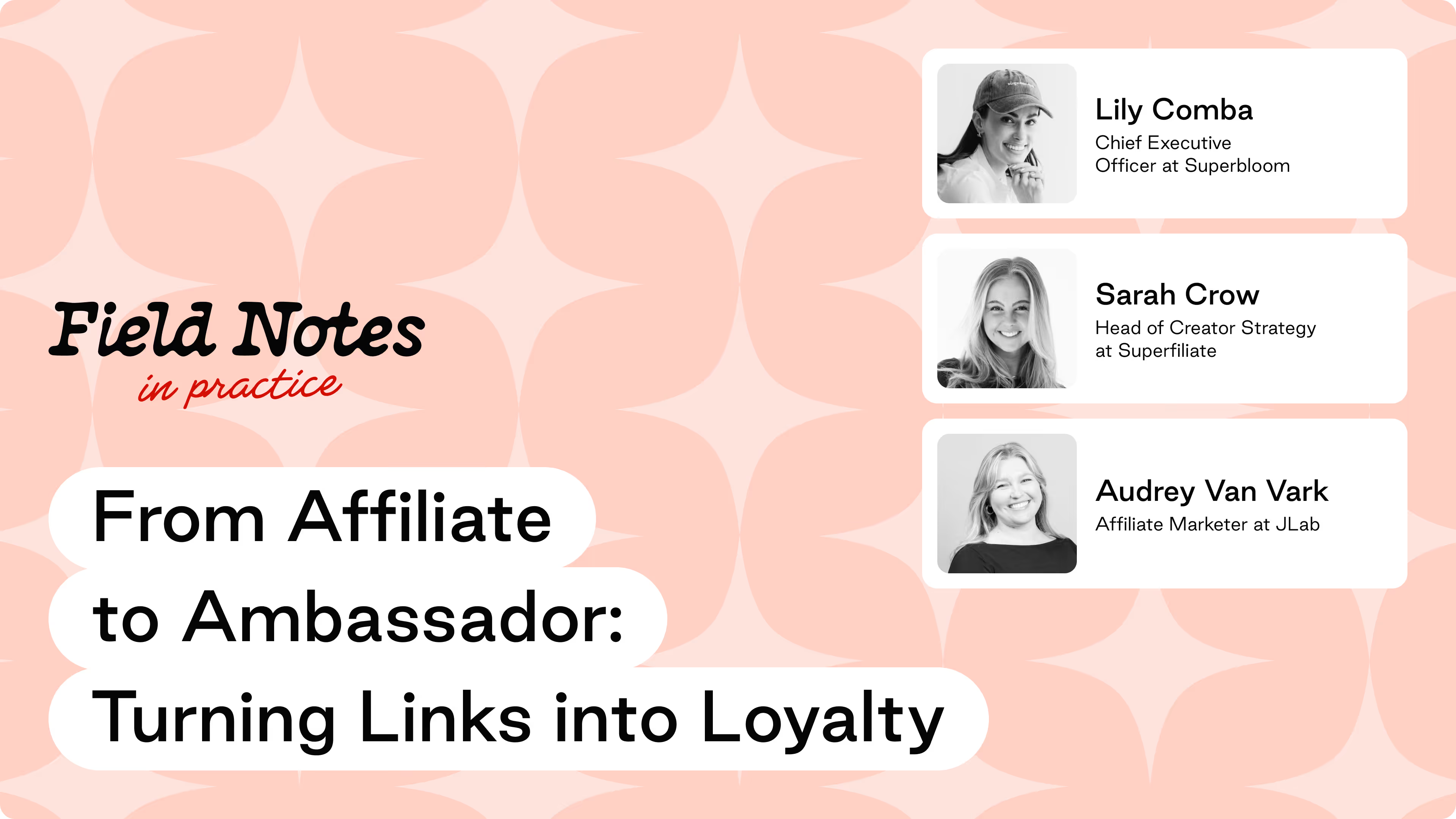
Field Notes In Practice | From Affiliate to Ambassador: Turning Links into Loyalty

Most brands can get a handful of affiliates posting. The harder question that separates programs that plateau from programs that compound is: what happens after the first conversion?
How do you keep affiliates engaged when the initial excitement fades? How do you turn a transactional link-sharing relationship into something that actually builds your brand?
Audrey Van Vark has done this across multiple channels and brands. At JLab, she manages affiliate programs spanning TikTok Shop, Amazon, Instagram, and traditional affiliate. Audrey built a system that moves creators from first post to brand ambassador with co-branded product lines.
On this edition of Field Notes: In Practice, Audrey breaks down the frameworks, incentives, and relationship tactics that make this “affiliate to ambassador” system work.
An affiliate channel isn't a set-and-forget play
The most common mistake brands make with affiliate programs? Treating them like a passive channel. You recruit creators, hand them a link, and wait. But creators need to feel connected to your brand and see a reason to keep showing up — especially when their inboxes are flooded with competing offers.
In a crowded category like audio, where JLab competes with Bose, JBL, and dozens of others, the affiliate experience becomes the moat. Audrey leans into gamification: leaderboards, monthly challenges, cash prizes, and direct one-to-one communication. She makes her personal email available and responds to DMs. The message to affiliates is clear — you're not a number in a dashboard.
"You want them [affiliates] but they also have to want you. You need to make sure that it's a very equal conversation—”here's why I think you should do my product."

Audrey Van Vark
Affiliate Marketer at JLab
Fame, love, and exclusivity: the three pillars that keep affiliates posting
Audrey organizes her entire program around a framework she picked up early in TikTok Shop: give affiliates fame, love, and exclusivity.
Fame means amplifying their best content; running it as a paid ad, featuring them in a brand email or blog. Love means showing up for them personally, sending product without expectation, and checking in when performance dips. Exclusivity means giving top performers access to things no one else gets.
These aren't just perks; they're signals that the brand values the relationship enough to share ownership.
Audrey describes how JLab's three-pillar framework plays out in practice — from amplifying creator content as paid ads to exclusive product drops:
Discord isn't customer service — it's community infrastructure
One of JLab's most distinctive moves is running a 4,000-member Discord for their TikTok Shop affiliates. But the key insight isn't that they have a Discord (which is pretty common in affiliate circles) it's how they use it.
Audrey posts weekly content tips (like the top 5 performing hooks from JLab affiliates that week), runs monthly cash prize challenges, and uses the channel to publicly recognize top performers.
The best part? The Discord community self-moderates. When someone complains about a product issue, Audrey responds directly and routes them to support. But the broader community doesn't devolve into a complaint channel because there's too much momentum in the other direction.
"My affiliates will answer other people's questions, and once you get to that point is when you can step back and say: Okay, how else can I give this community something exciting?"
Audrey Van Vark
Affiliate Marketer at JLab
Give guidelines, but know where your “double yellows” are
JLab's best-selling TikTok Shop video wasn't planned. An affiliate named Bri — a single mom who eventually bought a house with her TikTok Shop commissions — took the JBuds Lux headphones and reframed the "be aware mode" feature as "safety mode," telling a story about overhearing men at the gym talking about her.
It was raw, real, and completely off-brief. Two years later, it's still their top performer.
The lesson: brands that over-brief their affiliates get content that looks like everything else.
Audrey's approach is to set "double yellows" — hard lines that cannot be crossed (no violence, no misinformation, no compliance violations) — and then let creators create. The content that flops is the cost of doing business.
But the content that breaks through? That’s the content you could never have written yourself.
Audrey walks through the JBuds Lux "safety mode" story and why the best affiliate content comes from letting go:
When performance dips, the answer is communication — not panic
Creator fatigue is real. Even JLab's top affiliates see diminishing returns after a string of posts. Audrey's response isn't to cut them or push harder; it's to have an honest conversation.
She'll tell a creator directly: you've posted ten times in two months and only one performed well. Do we need a break? A different product? A different angle?
This works because the relationship already exists. Affiliates who feel like partners — not vendors — are willing to have real conversations about what's not working. Sometimes the answer is a platform shift (like moving from TikTok to Instagram Reels). Sometimes it's just taking a breather.
The point is that the brand and the creator diagnose the problem together, rather than one side making assumptions.
Build a ladder, not a ledge
The strongest thread running through JLab's “affiliate to ambassador ”strategy is transparency about progression. Affiliates know exactly what it takes to move from a basic commission structure to meta ad authorization, to a $400/month product budget, to full brand ambassador status with co-branded products. Each tier has specific KPIs. There's no ambiguity.
This clarity is what makes the program self-sustaining. Affiliates aren't waiting for a brand to decide they're important enough; they're working toward visible milestones. And when they hit those milestones, the rewards feel earned, not arbitrary.
That's the difference between an affiliate who posts when they feel like it and an ambassador who's genuinely invested in the brand's success.
Building an affiliate program that retains and grows its best creators requires more than good commission rates — it requires systems for communication, progression, and community. Superfiliate helps brands build those systems so affiliate relationships compound instead of churn.